07th August 2026
Sigiriya Day Trip: Rock Climb, Village Lunch & Elephant Safari (2026)
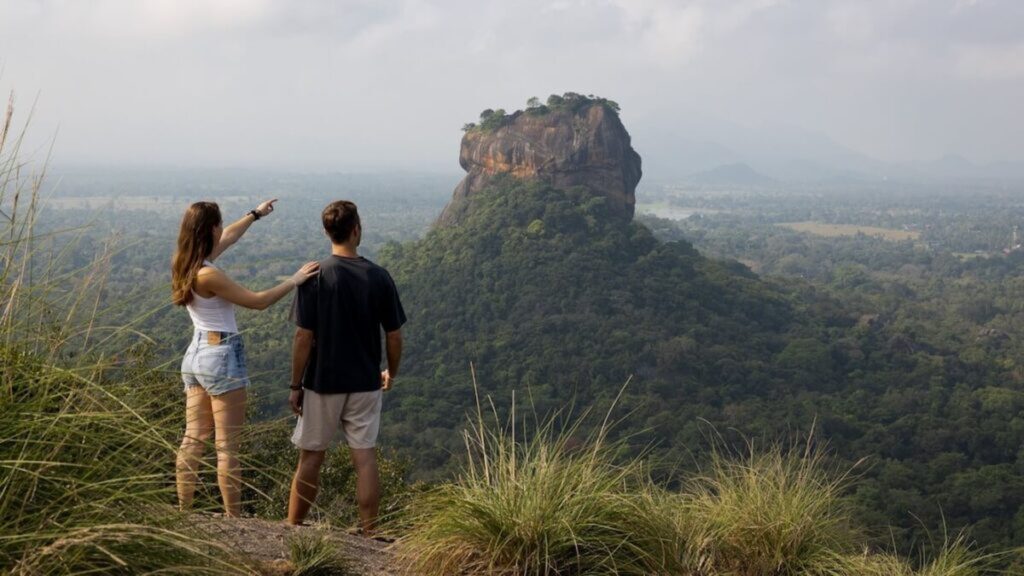
You step off the bus, squint into the morning glare, and there it is. A two-hundred-metre column of orange-brown granite punching straight out of the jungle canopy, its summit flattened like a table set for kings. That single image has pulled travellers to central Sri Lanka for well over a century, and it still hits hard the first time you see it.
A Sigiriya day trip, though, is so much more than climbing that rock and snapping a photo at the top. Done well, it threads together a 1,500-year-old fortress, a slow bullock-cart ride through paddy fields, a home-cooked lunch you helped prepare, and an open-jeep safari where wild elephants outnumber the tourists. All in roughly twelve hours. All within a 40-kilometre radius.
This guide walks you through every piece of that day, step by step, with the 2026 ticket prices, trail timings, park comparisons, and small practical details that save you from standing in the wrong queue or missing the elephants by twenty minutes. Grab a cup of tea. Let’s plan.
Why One Day Around Sigiriya Beats a Simple Rock Climb
Here’s the thing. Most first-time visitors allot three hours for Sigiriya, tick it off, and drive south toward Kandy. They’ve seen maybe 30 percent of what the area offers.
The Cultural Triangle, the broad stretch of dry-zone jungle and ancient reservoirs that surrounds the rock, packs an absurd density of experiences into a small radius. Within a 30-minute drive you have:
- A UNESCO World Heritage fortress and its 5th-century water gardens
- A traditional village where families still cook over clay ovens and weave palm-leaf roofs
- Two national parks (Minneriya and Kaudulla) famous for the largest seasonal elephant congregations in Asia
- A second rock, Pidurangala, with a panorama that makes Sigiriya itself the star of the photograph
- The medieval ruins of Polonnaruwa and the golden cave temples of Dambulla
A Sigiriya day trip that weaves even three of these together feels full without feeling rushed. You get history, culture, food, and wildlife in a single arc from sunrise to sunset. And because everything sits close, you spend more time experiencing and less time sitting in traffic.
The Sigiriya Rock Fortress Climb:
What Actually Happens on Those 1,200 Steps
A Quick Slice of History
(Enough to Make the Walk More Interesting)
In 477 AD, a prince named Kasyapa seized the throne of Anuradhapura after a violent family dispute. Paranoid about retaliation, he moved his capital to this massive granite outcrop and built a palace complex on its flat summit, complete with audience halls, bathing pools, and gardens. The entrance was framed by two enormous carved lion paws, giving the site its name: Sīhāgiri, Lion’s Rock.
Kasyapa’s reign lasted eighteen years. His half-brother Moggallana returned with an army, Kasyapa’s forces deserted him mid-battle, and the king took his own life in 495 AD. The palace was handed to Buddhist monks, used as a monastery for a few centuries, and then swallowed by jungle. British colonial surveyors stumbled on the ruins in the 1830s, and the site has been a magnet for curious travellers ever since. UNESCO inscribed it as a World Heritage Site in 1982.
None of that is essential reading before you go. But knowing it while you’re halfway up, passing the faded frescoes of celestial maidens and running your fingers near the Mirror Wall’s ancient graffiti, makes the climb feel less like a stair workout and more like a walk through someone’s extraordinary, ill-fated ambition.
The Climb Itself: Timing, Effort, and What You’ll Pass
Let’s be honest about the physical part. The ascent covers roughly 1,200 steps and gains about 180 metres of elevation. For a reasonably fit person, the way up takes 40 to 55 minutes. The descent is quicker, around 20 to 25 minutes. If you’re travelling with young children, older parents, or you simply prefer to stop and photograph every fresco, budget a full two hours round trip. You won’t regret the extra time.
The path is well maintained: metal staircases bolted to the rock, shaded stretches through the lower gardens, and a final near-vertical section where you grip a railing and look straight down at the canopy. It’s strenuous in the heat, genuinely thrilling in parts, and absolutely doable for anyone without serious mobility issues.
Key stops along the way:
The Water Gardens and Boulder Gardens (base level): Flat, photogenic, and included in your ticket. Terraced pools, symmetrical pathways, and fountains fed by a 5th-century hydraulic system that still channels water in the rainy season. Give yourself 20 minutes here before you start climbing, or save them for the walk back down.
The Fresco Gallery: A sheltered alcove roughly two-thirds up the rock where vivid paintings of women (likely celestial nymphs or court attendants) cling to the wall. Only about 18 figures survive from what was once a much larger gallery. Photography is permitted, but no flash.
The Mirror Wall: A polished plaster surface beside the fresco gallery where visitors from the 6th century onward scratched verses in old Sinhala. The inscriptions are protected now, but you can still see the faint etchings.
The Lion Platform: The massive carved paws that gave the rock its name. The lion’s head is long gone, but the two front paws, each taller than a person, still frame the final staircase. It’s a genuinely striking moment.
The Summit: About 1.6 hectares of ruined palace foundations, bathing pools, and viewing platforms. On a clear morning you can see Pidurangala to the north, the Knuckles Range far to the south, and an unbroken quilt of green jungle in every direction.
Sigiriya Tickets, Hours, and Small Print (2026)
Foreign adult ticket: As of 2026, US $35 (approximately LKR 11,270 at current rates). This covers the fortress climb, the water gardens, the boulder gardens, and the on-site Sigiriya Museum. One ticket, all access.
SAARC nationals: US $20. Carry your passport to prove eligibility.
Sri Lankan nationals: A heavily subsidised local rate applies.
Children under 6: Free.
Hours: The site opens at 5:00 AM and closes at 6:30 PM. The ticket counter stops selling around 5:00 PM, so plan accordingly.
Best windows: Arrive at 6:30–7:00 AM for cooler air, softer light, and thinner crowds. Alternatively, a 3:30 PM entry means fewer visitors and a possible sunset view from the top. Just carry a small torch for the descent if you’re pushing toward closing time.
A practical note: buy your ticket at the official counter near the main gate. Avoid touts offering “guided entry” at inflated prices. The ticket is straightforward, and the path is clearly signposted. If you want a guide (and a good one adds real colour to the history), hire one at the tourist information desk just inside the entrance.
Small Survival Tips for the Climb
- Wear closed-toe shoes with grip. Flip-flops on those final metal steps are a bad idea.
- Carry at least one litre of water per person. There are no vendors past the ticket gate.
- Sunscreen, a hat, and sunglasses matter more than you’d think. The dry-zone sun is fierce by 9 AM.
- Monkeys hang around the lower gardens and the base of the rock. They’re entertaining to watch and aggressive about snacks. Keep food zipped inside your bag. Do not feed them.
- There are rest benches at the fresco level and the lion platform. Use them. Catch your breath. Look at the view.
The Village Tour
You’ve come down from the rock. Your calves are filing a complaint. The morning sun is climbing toward that 30°C mark. This is the perfect moment to slow everything right down.
The traditional village tour, often marketed as the “Sigiriya Village Experience” or the “Hiriwadunna Village Tour,” is a 2.5to 3-hour immersion into the rhythms of rural life in the dry zone. It’s gentle, it’s sensory, and the lunch at the end is legitimately one of the best meals many travellers eat in Sri Lanka.
Here’s how a typical morning flows:
The Bullock-Cart Ride
You climb onto a wooden cart pulled by a pair of zebu bulls and bump along a narrow dirt track through paddy fields. The pace is gloriously slow. You pass coconut palms, banana groves, and the occasional white egret stalking frogs in the irrigation channels. Your driver might chat about the rice cycle, or he might just let the sound of hooves and birdsong do the talking. Some operators now offer e-bike rides through the same scenery if you’d prefer to pedal, and that’s a fun alternative, but the bullock cart has a charm that’s hard to replicate.
The Lake Crossing
The track ends at the edge of Thalkote Lake (also called Hiriwadunna Lake depending on the operator). You step onto a narrow catamaran-style boat or a traditional reed craft, and a boatman poles you across the still water. From the middle of the lake, both Sigiriya and Pidurangala rise above the treeline in the distance. The crossing takes maybe ten minutes. It’s calm, it’s photogenic, and it gives your legs a rest.
Walking the Farms
On the far shore, you walk through working paddy fields and kitchen gardens. Your guide points out chili plants, eggplant rows, and the stilted watch-huts called pēḷa that farmers build to guard crops from wild elephants at night. You might see a woman weaving coconut fronds into roofing panels, or a man grinding spices on a flat stone. Nobody performs for you. You’re just watching a Tuesday morning unfold.
The Cooking Session and Lunch
This is the centrepiece. You arrive at a village home where the family has already started preparations. Clay pots sit over a wood-fired hearth. Freshly grated coconut waits in a bowl. You’re invited to help, to stir, to taste, to ask questions. A typical spread includes:
- Coconut sambol (grated coconut, chili, lime, onion)
- Two or three vegetable curries (jackfruit, pumpkin, or bean, depending on the season)
- Dhal (lentil curry)
- Steamed rice, sometimes cooked in a clay pot over open flame
- Papadum and a small pickle
Everything is served on banana leaves or in earthenware bowls. You eat with your hands if you like (they’ll show you how) or with a spoon. The flavours are immediate, uncomplicated, and deeply satisfying. Many travellers say this lunch, eaten cross-legged on a mat in a shady courtyard while a ceiling fan wobbles overhead, outshines restaurant meals for the rest of their trip.
Booking the Village Tour
- Most operators include hotel pickup from Sigiriya, Habarana, or Dambulla.
- Morning slots (starting around 9:30 or 10:00 AM) are cooler and let you finish by early afternoon.
- Prices range from roughly US $25 to $45 per person depending on inclusions and group size.
- Book through your hotel, a reputable local agency, or platforms like GetYourGuide or Viator. Read recent reviews; the quality of the host family makes or breaks the experience.
- If you have dietary restrictions (vegan, gluten-free, allergies), tell the operator when you book. Village kitchens are flexible and happy to adjust.
Elephant Safari: Minneriya vs Kaudulla and the Famous “Gathering”
Why This Stretch of Jungle Is Special
Minneriya National Park sits about 15 km east of Sigiriya, a 25to 30-minute drive. Kaudulla National Park is a bit farther, roughly 38 km southeast, about an hour by road. Both parks are part of the same Hurulu Eco-Region elephant corridor. The herds move between them seasonally, following water.
From July through October, as the dry season tightens and smaller water sources evaporate, elephants funnel toward the remaining reservoirs. Minneriya’s tank and Kaudulla’s tank become the watering holes for hundreds of animals at once. This concentration is known locally and internationally as “The Gathering,” and it’s one of the most impressive wildlife spectacles in Asia. On a strong day, guides have counted over 300 elephants on the Minneriya grasslands.
Which Park Should You Choose?
Honestly? Let your safari operator decide on the morning of the trip. Experienced drivers and guides track herd movements daily, sometimes using spotter networks and radio updates. In peak season (August to October), the elephants might be in Minneriya one week and Kaudulla the next.
That said, here are the broad differences:
Minneriya is larger, more established in tourism, and the classic “Gathering” venue. In peak season it can attract more jeeps, which means occasional crowding at popular viewing spots.
Kaudulla tends to have fewer vehicles and a slightly wilder feel. Its elephant gatherings are equally impressive in the right weeks, and the drive from Sigiriya passes through beautiful dry-zone forest.
Outside peak season (November through June), elephant numbers thin and spread out. Sightings are still common, just less concentrated. You’ll likely see family groups of 10 to 30 rather than herds of 200.
A good operator will check conditions and route you to whichever park has the most activity that day. Ask before you book.
What a Safari Afternoon Looks Like
Most jeep safaris from Sigiriya run about 3 to 3.5 hours, typically starting around 2:30 PM. Afternoon is the sweet spot because elephants rest in the shade during midday heat and become active again as the sun drops. You roll out in an open-sided jeep, wind in your hair, and the driver follows tracks and radio chatter to find the herds.
You’ll see adult females leading calves through tall grass. Bulls with cracked tusks standing apart, ears flapping. With luck, a group bathing in the reservoir, spraying water over their backs while egrets perch on their heads. Beyond elephants, keep your eyes open for sambar deer, toque macaques, water buffalo, wild boar, peacocks, and a long list of waterbirds.
Safari Costs and Logistics (2026)
Park entrance fee: Around US $10 per person, paid at the gate.
Jeep hire (shared, 6–8 passengers): Roughly US $50–$60 per person, covering the vehicle, driver, and fuel.
Private jeep: Higher, but worth it if you want flexibility and fewer strangers jostling for camera angles.
Duration: 3 to 4 hours including travel from Sigiriya.
Booking: Arrange through your hotel, a local safari company, or online platforms. Confirm whether the quoted price includes park fees and the driver’s tip.
Safety Around Wild Elephants
This matters, so I’ll be direct. The roads between Sigiriya and the national parks pass through active elephant habitat. Elephants cross these roads. They are enormous, they can charge without much warning, and a vehicle collision is dangerous for everyone involved.
Always travel to the park in a safari jeep or a closed vehicle. Do not attempt the drive in a tuk-tuk or on a rented scooter, especially at dawn or dusk when elephants are most mobile.
Inside the park, stay in the jeep. Do not stand on the roof, do not shout, do not throw food.
Keep your distance. Your driver knows how close is too close. Trust them.
If an elephant approaches the vehicle, the driver will reverse slowly. Stay seated and stay calm.
Bonus Experiences Worth Squeezing In
Pidurangala Rock: The View of Sigiriya
Two kilometres north of the fortress, Pidurangala is a smaller, rougher rock with a stairway and a scrambling path to a broad summit plateau. The hike takes 20 to 30 minutes. At the top you get a 360-degree panorama, and the headline view is Sigiriya itself, rising clean out of the jungle in the afternoon light.
Many travellers climb Pidurangala at sunrise or sunset for the photography. The entrance fee is modest (around LKR 500 for foreigners, a few hundred rupees for locals). Wear sturdy shoes; the final section involves stepping over and around large boulders. It’s not dangerous, but it’s not a paved walk either.
If your Sigiriya day trip has even a small gap in the late afternoon, slot Pidurangala in. The photos you take from its summit will be the ones you frame.
Hot Air Balloon over the Cultural Triangle
Between November and April, operators run sunrise balloon flights over the region. You’re collected from your hotel around 4:30 AM, given tea and a light briefing, and then you lift off as the sky turns amber. Below you: Sigiriya, Dambulla’s golden temple, patchwork rice paddies, and dark reservoirs catching the first light.
The flight lasts about an hour. You land, pop a bottle of champagne (a tradition borrowed from ballooning everywhere), and get a flight certificate. It’s not cheap, typically US $180 to $250 per person, and spots fill fast in season. Book at least a few weeks ahead.
Cycling the Countryside
Guided cycling tours have grown popular around Sigiriya and nearby Polonnaruwa. You pedal along quiet village roads, past reservoirs, through small jungles, and alongside paddy fields that stretch to the tree line. Some tours combine a half-day cycle through the Polonnaruwa ruins with an afternoon safari.
Helmets and bikes are provided. You don’t need to be a serious cyclist; the terrain is flat and the pace is relaxed. It’s a lovely way to see the landscape at a human speed, stopping for king coconut water at a roadside stall whenever the group feels thirsty.
Polonnaruwa Ancient City
About 59 km east of Sigiriya (roughly an hour’s drive), Polonnaruwa was Sri Lanka’s medieval capital from the 11th to 13th centuries. Its ruins spread over a wide area: royal palaces, a massive stone Buddha carved into a cliff face at Gal Vihara, dagobas, and irrigation tanks.
You can explore by bicycle, tuk-tuk, or on foot. A focused half-day (3 to 4 hours) covers the highlights. If archaeology genuinely excites you, give it a full day. Many travellers pair Polonnaruwa with their Sigiriya day trip by splitting the two across a two-day itinerary.
Dambulla Cave Temple
Fifteen to twenty minutes south of Sigiriya, Dambulla’s five caves contain over 150 Buddha statues and vibrant ceiling paintings accumulated over 2,000 years. It’s another UNESCO site, and it pairs naturally with a Sigiriya visit if you have a few spare hours. The climb to the caves is short, and the views from the entrance terrace are a nice bonus.
Sample Sigiriya Day Trip Itineraries
The One-Day Plan (Packed but Doable)
Time | Activity |
6:00 – 6:30 AM | Arrive at Sigiriya. Buy ticket. Start the climb while the air is cool. |
8:00 – 8:30 AM | Reach the summit. Explore the palace ruins, take photos, soak in the view. |
8:30 – 9:15 AM | Descend. Walk the water gardens and boulder gardens at the base. |
9:15 – 9:45 AM | Quick visit to the Sigiriya Museum (included in ticket). Grab breakfast or strong tea in Sigiriya village. |
10:00 AM – 1:00 PM | Village tour: bullock-cart ride, lake crossing, farm walk, cooking session, and lunch. |
1:00 – 2:00 PM | Rest. Hydrate. Maybe a short nap at the hotel. |
2:30 – 5:30 PM | Elephant safari at Minneriya or Kaudulla (whichever the guide recommends). |
6:00 – 6:30 PM (optional) | Sunset climb at Pidurangala if you still have legs and light. |
Evening | Dinner at your hotel or a local eatery in Habarana / Sigiriya. Sleep well. You earned it. |
The Two-Day Plan (Slower, Deeper)
Day 1:
Sunrise climb of Sigiriya (6:00 – 8:30 AM). Water gardens and museum.
Village tour with cooking and lunch (10:00 AM – 1:00 PM).
Afternoon at leisure. Pool time, a walk around Sigiriya village, or a visit to Dambulla Cave Temple.
Sunset hike up Pidurangala for photographs.
Day 2:
Early drive to Polonnaruwa. Cycle or tuk-tuk through the ruins (7:30 AM – 12:00 PM).
Lunch in Polonnaruwa or Habarana.
Afternoon elephant safari (2:30 – 5:30 PM).
Return to Sigiriya / Habarana for the evening.
Getting There: Distances at a Glance
Colombo to Sigiriya: ~170 km, 3 to 3.5 hours by car via the Kandy or Kurunegala route.
Bandaranaike International Airport (CMB) to Sigiriya: ~150 km, roughly 3 hours.
Habarana (nearest mid-size town, bus hub, and rail-adjacent stop) to Sigiriya: ~10 km, 15 minutes.
Sigiriya to Minneriya National Park: ~15 km, 25–30 minutes.
Sigiriya to Kaudulla National Park: ~38 km, about 1 hour.
Sigiriya to Polonnaruwa: ~59 km, 1 to 1.5 hours.
Sigiriya to Dambulla: ~15 km, 20 minutes.
Practical Tips That Actually Save Your Day
Weather and best time to visit: Sigiriya sits in Sri Lanka’s dry zone. Temperatures hover between 27 °C and 34 °C for most of the year. April through August are the hottest months; carry extra water and sun protection during that stretch. The northeast monsoon (November to February) brings some rain to the region, but it’s generally lighter than what the southwest coast receives. For the elephant Gathering, aim for July through October. For the hot air balloon, November through April. There’s no single “perfect” month, which is part of Sigiriya’s charm.
Footwear: Sturdy sneakers or light hiking shoes for the rock climb and Pidurangala. Sandals are fine for the village tour and safari. You’ll be on your feet for a good portion of the day, so comfort beats fashion here.
Water and food: Tap water is not safe to drink. Buy sealed bottled water or carry a purification bottle. The village lunch is cooked fresh and safe. Carry a few snacks (nuts, a banana) for the climb and the safari.
Money: Carry cash in Sri Lankan rupees for small purchases, tips, and park fees. The Sigiriya ticket counter accepts US dollars and rupees. ATMs exist in Habarana and Dambulla but are scarce right at the rock. Inform your bank about travel plans if you intend to use a card.
Mosquitoes: The dry zone is less malarial than it once was, but mosquitoes appear at dawn and dusk, especially near water. A simple repellent with DEET or picaridin is sensible, particularly for the safari and the village tour.
Guides and booking: You can explore Sigiriya independently; the path is clear and signposted. A certified guide (available at the entrance) adds historical depth and helps you spot details you’d walk past. For the village tour and safari, book through a reputable operator. Smaller group sizes (6 to 8 for a jeep) make a noticeable difference in comfort and wildlife viewing.
Visas and entry: Most nationalities need an Electronic Travel Authorization (ETA) for Sri Lanka, obtainable online before departure. As of 2026, there are no pandemic-related entry restrictions. Standard travel insurance that covers medical evacuation is wise.
Photography: The Sigiriya ticket includes photography for personal use. Drones require separate permission from the Civil Aviation Authority and the Department of Archaeology, and getting that permission at short notice is unlikely. Leave the drone at the hotel.
Frequently Asked Questions
How many steps is the Sigiriya climb?
Roughly 1,200 steps from the entrance to the summit. The path includes shaded garden sections, metal staircases, and a final steep stretch near the lion platform. Allow 40 to 60 minutes going up at a steady pace.
Is the Sigiriya day trip suitable for children?
Yes, for kids aged around 6 and above who can handle stairs. The village tour and safari are enjoyable for all ages. Very young children may find the climb tiring, so a carrier or plenty of breaks helps. The site is not wheelchair-accessible past the water gardens.
Can I visit Sigiriya and do a safari on the same day?
Absolutely. The one-day itinerary above does exactly that. Climb early, take the village tour and lunch mid-morning, and hit the safari by 2:30 PM. It’s a full day, but the timings work because everything is within 30 minutes’ drive.
Minneriya or Kaudulla: which is better for elephants?
Both host the same migratory herds. In peak Gathering season (August to October), Minneriya often has larger concentrations. Kaudulla tends to be less crowded. Ask your safari operator on the morning of the trip; they’ll know where the elephants are that day.
What should I wear for the Sigiriya climb?
Lightweight, breathable clothing, a hat, sunglasses, and closed-toe shoes with good grip. Carry a small backpack with water, sunscreen, and a camera. There’s no dress code for the rock itself, but if you also plan to visit Dambulla’s cave temple, cover your shoulders and knees.
Is it safe to drive to the national parks on my own?
The roads pass through elephant territory, and animals do cross, particularly at dawn and dusk. A closed car is safer than a tuk-tuk or motorbike, but the most sensible option is a guided jeep safari. The driver knows the routes, the animal behaviour, and the park rules.
How far in advance should I book the hot air balloon?
During the November-to-April season, balloon slots fill quickly. Booking two to three weeks ahead is recommended. In December and January, even earlier if possible.
What is the Sigiriya entry fee in 2026?
US $35 for foreign adults, US $20 for SAARC nationals. The ticket covers the rock climb, water gardens, boulder gardens, and the Sigiriya Museum. Children under 6 enter free.
Final Thought
There’s a moment, usually around mid-afternoon, when the jeep engine cuts and the driver points toward a gap in the grass. You look up from your phone or your water bottle, and thirty metres away a mother elephant is guiding her calf toward the reservoir’s edge. The calf stumbles. The mother nudges it upright with her trunk. The rest of the herd grazes in a loose, rumbling semicircle around them.
You forget the 1,200 steps. You forget the heat. You just watch.
That’s the Sigiriya day trip. The rock gives you the history. The village gives you the food and the human warmth. The safari gives you that moment where the modern world drops away and you’re simply a guest in something much older and much larger than yourself.
Plan the day. Pack the water. Wear the sturdy shoes. And leave a little room in the schedule for the unplanned stops, the extra cup of tea, the conversation with a farmer who wants to show you his chili patch. Those gaps are where the best memories sneak in.
Information in this guide reflects conditions and pricing as of early 2026. Ticket prices, park fees, and tour costs can shift with exchange rates and policy updates, so a quick check with your accommodation or a local operator before your visit is always smart. All attractions described are open and operating normally. Sri Lanka welcomes you.