14th August 2026
Sigiriya vs Pidurangala (2026) – Cost, Hike & Views Compared
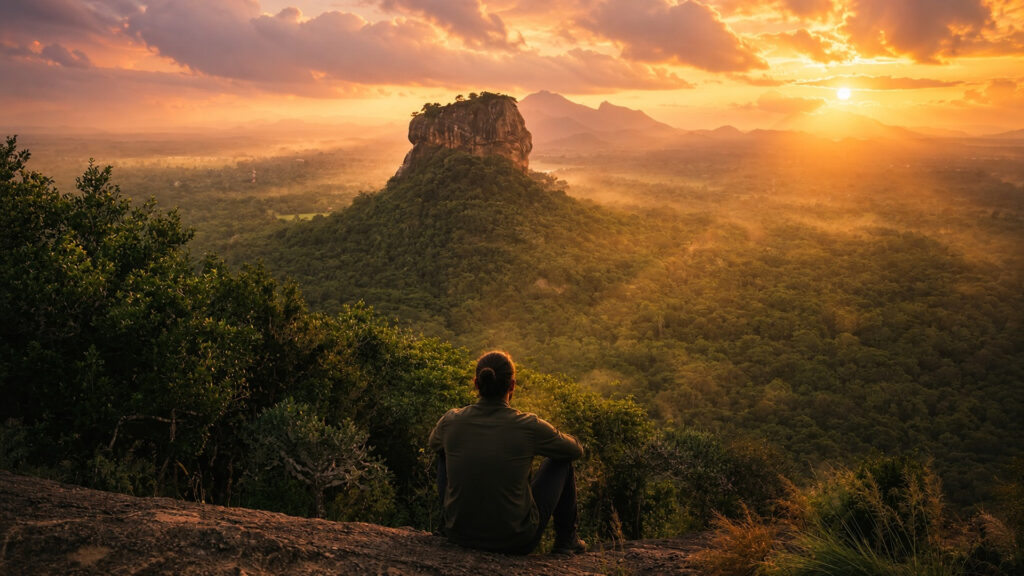
You’ve got a free morning in Sri Lanka’s Cultural Triangle, a pair of hiking shoes in your bag, and one big question rattling around your brain. Sigiriya vs Pidurangala. Which rock do you actually climb?
Maybe you’ve seen the photos. That absurd, gorgeous slab of orange granite shooting straight out of flat jungle, crowned with 1,500-year-old palace ruins. That’s Sigiriya. And then there’s the slightly scrappier, slightly wilder neighbour just a couple of kilometres north, where you scramble over boulders like a kid in a playground and get rewarded with the single best frontal view of Sigiriya you’ll ever frame on a camera. That’s Pidurangala.
Both are brilliant. Both deserve a spot on your Sri Lanka itinerary. They just deliver very different mornings.
This guide pulls together everything a 2026 traveller needs to make the call: current entry fees, honest difficulty ratings, what the views actually look like from each summit, crowd realities, sunrise logistics, and a few practical warnings nobody mentions until you’re halfway up in flip-flops regretting every life choice. Grab a king coconut. Let’s get into it.
The 60-Second Snapshot
If you’re skimming on a train from Kandy and need answers fast, here’s the short version.
Sigiriya Rock is the UNESCO-listed, 5th-century fortress-palace of King Kashyapa. You’re climbing 1,200-plus well-maintained steps past frescoes, water gardens, and the famous Lion’s Paw gate. Entry for foreign adults in 2026 runs US$35 (roughly £27). The site opens at 5:00 AM and closes at 6:30 PM. The climb takes about an hour to an hour and a half round-trip, and the summit sits around 200 metres above the surrounding plain. Expect crowds. Lots of them. Especially between 8 AM and noon.
Pidurangala Rock is the rugged, monastery-rooted neighbour. Entry is a temple donation of roughly LKR 500 to 1,000, so somewhere between $3 and $6. The temple gate opens at 5:00 AM, last entry around 6:00 PM. The hike is shorter, maybe 30 to 45 minutes up, though “shorter” is doing some heavy lifting here because the final stretch is genuine rock scrambling. No handrails. No neatly laid steps. Just boulders, narrow squeezes, and a summit with zero fencing. The payoff? An unobstructed, almost head-on view of Sigiriya rising out of the jungle. Especially at sunrise, it stops your breath.
Same region. Same ancient history tangled between them. Completely different experiences on the trail.
Sigiriya Rock: What You’re Actually Walking Into
Calling Sigiriya “a rock” feels a bit like calling the Colosseum “a building.” Technically accurate. Wildly undersells the thing.
Sigiriya, or Lion Rock as it’s widely known, is a 5th-century fortress-palace built by King Kashyapa on a massive granite column that rises roughly 200 metres above the central Sri Lankan plains. The entire site is a UNESCO World Heritage property, and it earns that designation the moment you walk through the entrance and see the symmetrical water gardens stretching out ahead, their ancient hydraulic systems still occasionally functional after fifteen centuries.
The climb itself is structured almost like a curated walk through history. You pass the Water Gardens, then the Boulder Gardens, then reach the famous fresco gallery where painted figures of celestial women have survived (in restored form) on a sheltered rock face. The Mirror Wall, a polished surface once so reflective that King Kashyapa could see his own face in it, still carries graffiti scratched by visitors from as far back as the 7th century. (Yes, people have been leaving their mark on tourist sites for over a thousand years. Some things never change.)
Then comes the Lion’s Paw. Two enormous carved paws flanking a staircase, all that remains of what was once a full lion head with a mouth you walked through to enter the upper palace. It’s genuinely striking in person, and it’s where the queues tend to build because everyone stops for photos at the same three angles.
The final push to the summit plateau is steep, around 300-plus steps with limited shade, and your calves will let you know about it. Handrails and metal ramps keep it safe, though. Rest landings dot the route. You can stop, drink water, catch your breath, and keep going. Nobody’s rushing you.
At the top, the palace ruins spread across a wide, flat plateau. Foundation walls, a carved stone throne, a swimming pool cut into the rock (Kashyapa liked his luxuries), and a 360-degree panorama that takes in endless jungle canopy, irrigation reservoirs glinting in the distance, and the Knuckles Mountain Range on clear days. It’s a view that makes the entrance fee feel justified, even if your wallet briefly disagrees at the ticket counter.
Practical notes for Sigiriya in 2026:
Hours: Daily, 5:00 AM to 6:30 PM. Tickets sold until 5:00 PM.
Entry fee (foreign adult, non-SAARC): US$35. SAARC nationals get a reduced rate. Sri Lankan residents pay a separate, much lower fee.
Time needed: Budget roughly 2 to 3 hours total if you want to explore the gardens, fresco gallery, and summit without sprinting. The climb alone is 1 to 1.5 hours round-trip.
Footwear: Proper closed-toe shoes or hiking sandals. The steps are well-maintained, but the final section is steep and can be slick with morning dew.
Water and sun protection: Carry at least a litre of water. The upper steps have very little shade, and the Sri Lankan sun between 9 AM and 3 PM is relentless. A hat and sunscreen are genuinely necessary, not optional.
Pidurangala Rock
The Wilder Sibling With the Better Photo Op
Pidurangala sits about two kilometres north of Sigiriya, close enough that you can see one from the other, far enough that the experience feels like a different country.
Where Sigiriya is manicured, ticketed, and UNESCO-polished, Pidurangala is a functioning Buddhist temple with a hiking trail bolted onto the back of it. You walk through the temple grounds, past a 12.5-metre reclining Buddha carved into a rock overhang (this alone is worth the short walk in), and then the path starts climbing through jungle.
The first section is a straightforward dirt-and-stone trail. Manageable. Almost pleasant. Monkeys will watch you from the branches with expressions of deep, judgmental indifference. You’ll pass old brick ruins, remnants of the monastery that once stood here, and the occasional faded painted marker on a rock.
Then the trail changes.
The last 10 to 15 minutes of the Pidurangala hike are a genuine scramble. You’re pulling yourself up on boulder faces, wedging through narrow gaps between rocks, and finding footholds on uneven granite. There are no railings. No metal staircases. No friendly “this way” signs. Just rock, gravity, and your own sense of balance. A few travellers have compared it to a low-grade via ferrata or a CrossFit workout disguised as a hike. That’s not far off.
The summit is a broad, open rock ledge with no fencing. You can walk to the edges and look down into the jungle canopy. It’s thrilling and slightly terrifying in equal measure, and if you have a fear of heights, you’ll want to stay toward the centre.
And then you turn around, and there’s Sigiriya.
Full frontal. The entire Lion Rock silhouette, the palace plateau on top, the jungle rolling out on every side. At sunrise, the light hits Sigiriya’s eastern face and turns the granite a warm, almost molten gold. Dozens of trip reports, blog posts, and Reddit threads agree on one thing: this view, from this angle, at this hour, ranks among the finest in all of Sri Lanka. And you got it for the price of a temple donation.
Practical notes for Pidurangala in 2026:
Hours: Temple gate opens around 5:00 AM. Last entry is approximately 6:00 PM.
Entry cost: Roughly LKR 500 to 1,000 (about $3 to $6 / £2 to £4), collected as a temple donation at the entrance. Carry small bills. They may not have change for a 5,000-rupee note at 5:15 in the morning.
Time needed: 30 to 45 minutes to the summit, depending on your fitness and how much you pause at the reclining Buddha. Round-trip with time at the top: about 1.5 hours.
Footwear: This is non-negotiable. Wear proper hiking shoes or trail runners with good grip. Flip-flops, sandals, or smooth-soled sneakers are genuinely dangerous on the boulder scramble, especially if there’s any dew or residual rain. Countless traveller warnings repeat this exact point.
Headlamp or phone torch: If you’re doing the sunrise hike (and you should), you’ll be starting in the dark. The jungle section has no lighting. A headlamp keeps both hands free for the scramble.
No rails at the top: Keep children close. Keep a grip on your phone when you’re pulling it out for photos near the edges. There have been no widely reported serious incidents, but the summit is bare rock with a long drop, and common sense matters.
The Real Cost Breakdown
Let us talk about the elephant in the room when comparing Sigiriya vs Pidurangala. The price tag.
A lot of travel forums turn this into a debate about value. You are looking at a massive price gap. Sigiriya charges foreign adults US$35 (roughly £27) for a standard entry ticket. Pidurangala asks for a temple donation of about LKR 500 to 1,000, which translates to $3 to $6.
Before you write off Sigiriya as a tourist trap and rush to the cheaper rock, consider what that $35 actually funds. Sigiriya is a heavily managed UNESCO World Heritage site. Your ticket pays for the constant maintenance of those 1,200 metal steps, the preservation of the 5th-century frescoes, the security guards stationed along the route, and the conservation of the sprawling water gardens at the base. The infrastructure is top-tier. You are paying for a highly curated historical experience.
Pidurangala is a functioning Buddhist temple. The small donation you hand over at the gate goes directly to the monks who maintain the monastery, the reclining Buddha shrine, and the basic dirt paths leading up the mountain. You are trading polished infrastructure for raw adventure and a significantly lighter hit to your travel budget.
Hidden costs to keep in mind for both:
Transport: The rocks are about two kilometres apart. A tuk-tuk ride between them usually costs between 1,500 and 2,000 LKR (roughly $5 to $7). Agree on the price before you get in.
Hydration: Do not rely on buying water halfway up. There are no shops on the summits. Buy large bottles at your hotel or a local shop in the village before you start. A 1.5-litre bottle of water costs about 150 LKR at a local grocery store.
Guides: You do not need a guide for Pidurangala. The path is straightforward until the scramble, where a guide cannot carry you anyway. For Sigiriya, official guides are available at the entrance for around $15 to $20. They provide excellent historical context about King Kashyapa and the palace ruins. If you prefer exploring at your own pace, a good audio guide app or a detailed guidebook works perfectly.
The King Coconut Tax: You will see bright orange king coconuts sold at the base of both rocks. They cost about 300 to 500 LKR. Buy one. They are delicious, incredibly hydrating, and a quintessential Sri Lankan experience.
Climb Difficulty and the “Gym Fitness” Reality Check
Here is a scenario we see constantly. A traveller arrives in the Cultural Triangle feeling incredibly confident. They hit the gym four times a week back home. They run half-marathons. They look at the elevation maps for both rocks and assume a quick morning stroll awaits them.
Then they hit the final scramble at Pidurangala and suddenly remember they skipped leg day for the last six months.
Gym fitness is fantastic. It builds a great baseline. Hiking up uneven, ancient granite requires a completely different type of stamina, particularly in the calves and ankles. Let us break down exactly what your legs are signing up for.
The Sigiriya Rock Climb
Sigiriya is the more accessible option for the average visitor. The path is essentially a very long, very steep staircase.
You will climb roughly 1,200 steps. They are grouped into manageable sections with flat landings where you can stop, take a sip of water, and admire the view. Handrails and metal ramps secure the steeper sections. The site is heavily shaded for the first two-thirds of the climb, which helps immensely with the morning humidity.
The real test comes at the end. The final 300 steps leading up to the palace plateau are exposed to the direct sun and climb at a sharp incline. Your heart rate will spike. You will sweat through your shirt. Pacing yourself here is mandatory. Take a break every fifty steps if you need to. There is absolutely no rush, and the palace ruins at the top offer plenty of flat, shaded areas to recover once you arrive.
The Pidurangala Hike
Pidurangala is a different beast entirely.
The hike starts easily enough. You walk through the temple grounds and follow a shaded dirt trail through the jungle for the first fifteen minutes. This part feels like a pleasant nature walk. You might even spot some toque macaques swinging through the trees.
Then the dirt path ends and the granite begins.
The final ten to fifteen minutes involve genuine rock scrambling. You are pulling yourself up steep boulder faces using your hands. You are squeezing through narrow gaps between massive rocks. You are hunting for toe-holds on uneven stone. A few travellers have compared it to a low-grade via ferrata or a CrossFit workout. They are entirely correct.
This section requires agility, good balance, and a complete lack of vertigo. It is not technical rock climbing. You do not need ropes or harnesses. You do need to pay attention to where you place your hands and feet. Rain or morning dew makes the granite incredibly slick. If it rained the night before, exercise extreme caution and take your time.
The Footwear Rule: Wear proper closed-toe hiking shoes or trail runners with aggressive grip. Leave the flip-flops, canvas slip-ons, and smooth-soled fashion sneakers at your hotel. Slipping on a Pidurangala boulder is a quick way to end your Sri Lankan vacation with a twisted ankle.
Views, Photography, and the Sunrise Showdown
This is where the Sigiriya vs Pidurangala debate gets highly subjective. Both summits offer sweeping 360-degree panoramas of the Sri Lankan Cultural Triangle. You will see endless emerald jungle canopy, ancient irrigation reservoirs catching the light, and distant mountain ranges on a clear day.
The difference lies entirely in what you are looking at and how the morning light hits it.
Shooting Sunrise from Sigiriya
A lot of first-time visitors assume climbing Sigiriya at sunrise means watching the sun rise over the rock face.
Geography does not work that way. The sun rises in the east. Sigiriya is the giant rock in the middle. If you are standing on top of Sigiriya at dawn, the sun is rising behind you.
This is still a magnificent sight. You get to watch the golden morning light spill across the jungle, illuminating the mist rising off the lakes and the intricate geometric patterns of the water gardens far below. It is a spectacular, wide-angle landscape shot. You just will not get a photo of Sigiriya itself bathed in the sunrise glow, because you are standing on it.
The Pidurangala Sunrise Money Shot
If your primary goal is capturing the perfect, iconic photo of Lion Rock Sri Lanka, Pidurangala is the undisputed champion.
Because Pidurangala sits just north of Sigiriya, you have a direct, unobstructed, head-on view of the fortress. When you sit on the bare granite summit of Pidurangala at 5:45 AM, you are looking south. The sun rises over your shoulder and hits the eastern face of Sigiriya.
The giant rock glows. The granite turns a deep, vibrant orange. The jungle around it wakes up. It is the exact photo you see on postcards, travel magazines, and Instagram feeds across the globe.
Photography tips for the summit:
Bring a wide-angle lens: The sheer scale of Sigiriya from Pidurangala is massive. A wide-angle lens (or the 0.5x setting on your smartphone) captures the rock and the surrounding jungle in a single, dramatic frame.
Arrive early: The summit of Pidurangala is a bare rock ledge. It fills up quickly. By 5:30 AM, you might share the space with thirty or forty other early risers. Getting there by 5:15 AM ensures you can claim a good spot at the edge (safely!) and set up your tripod without bumping elbows.
Mind the edges: The summit has zero fencing. It is just bare rock dropping off into the canopy. Keep a firm grip on your expensive camera gear. A dropped lens is a tragic way to end a perfect morning.
What About Sunset?
Sunset at Sigiriya is highly popular. As the sun drops in the west, the rock face catches the evening light and turns a brilliant, fiery red. The site closes at 6:30 PM, giving you plenty of time to catch the golden hour and hike down before full dark.
Sunset at Pidurangala is beautiful, but it comes with a major logistical flaw. The sun sets behind Sigiriya, plunging Pidurangala into deep shadow quite early. Descending that rocky, boulder-strewn scramble in the pitch black is dangerous. Unless you have a high-lumen headlamp and excellent night vision, stick to the sunrise hike for Pidurangala.
The Ultimate “Both in One Day” Itinerary
Tackling both rocks in a single day is entirely possible. Many travellers choose this exact route to maximize their time in the Cultural Triangle. The key is pacing yourself and respecting the tropical heat.
Here is a highly effective, battle-tested schedule for a dual-rock day.
4:00 AM: Wake up. Drink a strong coffee or tea. Eat a light snack like a banana.
4:30 AM: Arrive at the Pidurangala temple gate. Pay your donation and start the hike.
5:15 AM: Reach the Pidurangala summit. Claim your spot on the bare granite.
5:45 AM: Watch the sunrise illuminate the eastern face of Lion Rock. Take your wide-angle photos.
6:30 AM: Descend carefully. The morning light makes the boulder scramble much easier to navigate.
7:30 AM: Eat a massive, well-deserved breakfast. Order a plate of string hoppers with coconut sambol and fresh papaya. Rest your legs for at least an hour.
8:30 AM: Arrive at the Sigiriya ticket office. You will beat the massive midday tour bus crowds while still enjoying full daylight for the ruins.
9:00 AM: Begin the Sigiriya climb. Take your time at the fresco gallery and the Lion’s Paw.
11:30 AM: Descend Sigiriya. The midday sun is now at its peak, making it the perfect time to retreat to your hotel.
12:30 PM: Jump into a swimming pool. You will absolutely need the cold water.
This schedule gives you the dramatic sunrise photos from Pidurangala and the deep historical exploration of Sigiriya, all while avoiding the worst of the midday heat and the peak tourist bottlenecks.
The Shared History of Kings and Monks
Understanding the history connecting these two giant rocks adds immense depth to your climb. The story revolves around a 5th-century royal family, a terrible betrayal, and a paranoid king seeking refuge in the sky.
King Kashyapa seized the throne of Anuradhapura through violent means. He walled his father, King Dhatusena, up alive and forced his rightful heir, his brother Moggallana, to flee to India. Terrified of his brother returning with an invading army, Kashyapa needed an impenetrable fortress. He chose the massive granite column of Sigiriya and spent years building a lavish sky palace on the flat summit.
Buddhist monks already occupied the caves and ledges of Sigiriya when Kashyapa arrived. The king required them to vacate the premises for his royal construction project. To appease the monks and secure his spiritual merit, Kashyapa offered them a new home at the base of the neighboring rock. He reportedly provided them with massive piles of gold to fund the relocation. The name Pidurangala roughly translates to “offered piles of gold”.
The monks used this wealth to build a magnificent monastery complex. They carved a spectacular 12.5-meter reclining Buddha into a rock overhang and constructed intricate brick shrines. They lived in peaceful devotion while the paranoid king fortified his sky fortress next door. Eventually, Moggallana did return from India. Kashyapa rode out to face him in battle, his army abandoned him, and he took his own life. Following his death, Sigiriya reverted to a Buddhist monastery until the 14th century. Both rocks share this deeply intertwined legacy of royal ambition and spiritual sanctuary.
Practicalities: Getting There, Gear, and Safety
Reaching the Cultural Triangle is straightforward. Most international flights land at Bandaranaike International Airport near Colombo. From the capital, you can hire a private driver for the three-hour journey north. Public buses run frequently and cheaply from Colombo to the main transit hub of Dambulla. From Dambulla, a local bus or a hired tuk-tuk will drop you right at the base of the rocks in about forty-five minutes.
Packing the right gear makes the difference between a miserable trek and a brilliant adventure.
Headlamp: Essential for the dark jungle trail at Pidurangala. Phone flashlights drain your battery and require a free hand, which you need for the boulder scramble.
Grippy trail shoes: Keep your flip-flops and smooth-soled fashion sneakers at your hotel. The granite becomes incredibly slick with morning dew.
Hydration: The summits are completely devoid of shops. Pack at least two liters of water per person before you start your hike.
Sun protection: High-SPF sunscreen, sunglasses, and a wide-brimmed hat are mandatory for the exposed upper steps of Sigiriya.
Small cash: Bring small denomination rupee notes for the Pidurangala temple donation, local tuk-tuks, and buying king coconuts from roadside vendors.
Safety on both rocks relies heavily on common sense. The toque macaques inhabiting the trails are highly intelligent and very food-motivated. Keep your snacks zipped securely inside your backpack. Feeding the monkeys encourages aggressive behavior and disrupts their natural foraging habits. Watch your step on the metal staircases, as morning condensation makes them slippery. Take your time, drink your water, and listen to your body.
Frequently Asked Questions
Which is better: Sigiriya or Pidurangala?
The best choice depends entirely on your travel priorities. Sigiriya offers a meticulously maintained UNESCO World Heritage experience featuring ancient palace ruins and wide panoramic views. Pidurangala provides a rugged, budget-friendly adventure with a challenging boulder scramble and the absolute best frontal photography angle of Lion Rock.
Is Pidurangala worth the climb?
Pidurangala absolutely deserves a spot on your itinerary. The minimal temple donation grants you access to a spectacular, raw hiking experience and a breathtaking summit view. The physical exertion required for the final scramble makes the panoramic payoff feel incredibly rewarding.
Can you see Sigiriya from Pidurangala?
You get a spectacular, unobstructed view of Lion Rock from the summit of Pidurangala. The neighboring rock provides a direct, head-on vantage point, making it the premier location for capturing the iconic silhouette of the fortress at sunrise.
Can I climb both rocks in one day?
Visitors frequently climb both rocks on the same day. A popular and highly effective strategy involves hiking Pidurangala for the early morning sunrise, eating a large breakfast, and tackling the stairs of Sigiriya a few hours later.
What are the sunrise and sunset rules for both rocks?
Both locations permit early morning access for sunrise hikes, with gates opening around 5:00 AM. Sigiriya remains open until 6:30 PM, making it a fantastic location for sunset photography. Pidurangala closes around 6:00 PM, and descending the rocky scramble in the dark is highly discouraged.
The Final Verdict
The debate over Sigiriya vs Pidurangala does not require a strict winner. These two geological giants offer complementary experiences that showcase the very best of the Sri Lankan Cultural Triangle.
Sigiriya delivers the grand historical spectacle. Walking through the ancient water gardens and standing on the ruins of a 5th-century sky palace connects you directly to the island’s royal past. The infrastructure makes the massive elevation gain accessible to almost anyone willing to put in the effort.
Pidurangala delivers the raw, unfiltered adventure. The jungle trail, the physical challenge of the boulder scramble, and the quiet atmosphere of the functioning monastery provide a deeply personal connection to the landscape. The sunrise view of Lion Rock from this vantage point remains one of the most striking visual memories you will take home from your entire trip.
If your schedule allows, buy the ticket for the ancient fortress and pay the donation at the wild monastery. Wake up early, lace up your trail shoes, and experience both magnificent rocks. The jungle canopy is waiting.