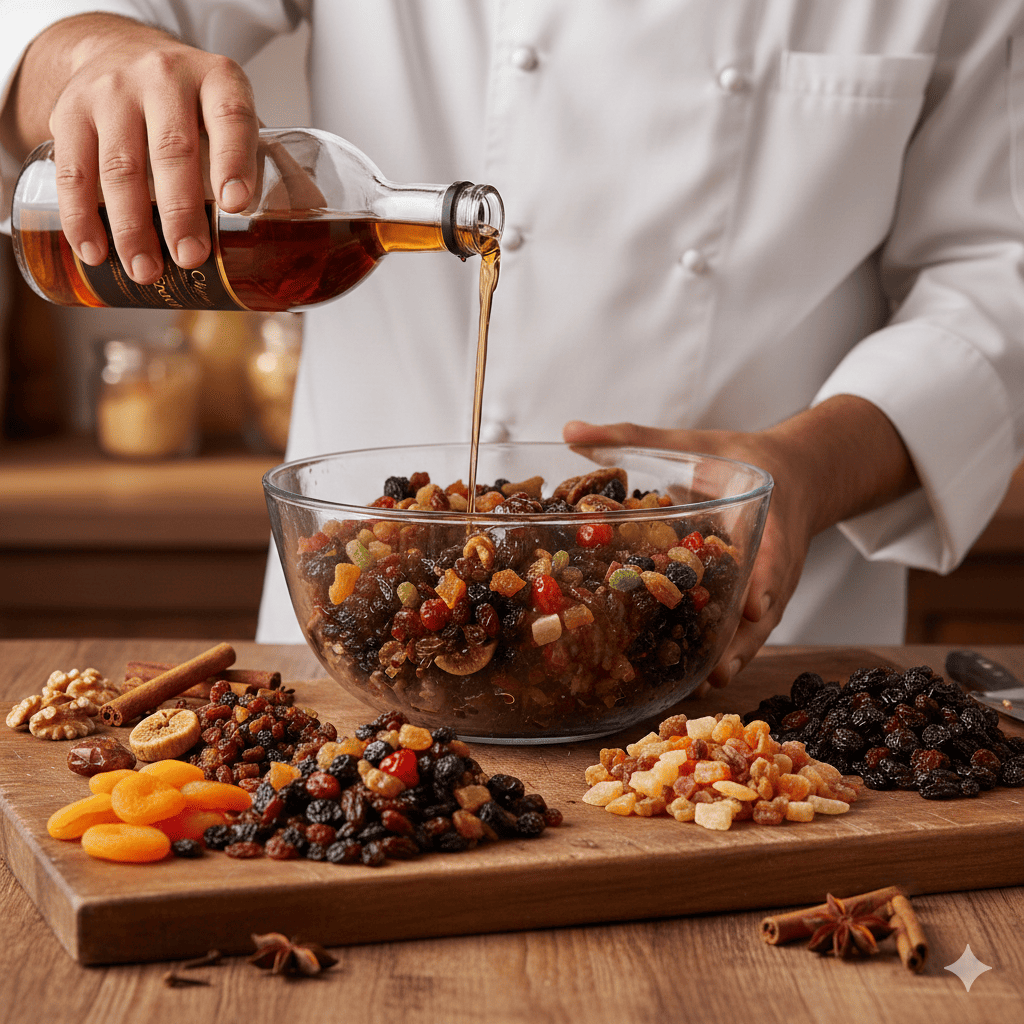
Ingredients
Method
Prepare the Fruit Mix (Ideally in Advance)
- Chop all dried fruits and candied peels finely — not too fine, not too chunky.(Tip: Blending bruises the fruit, releases excess moisture, and flattens flavour.Hand-chopping gives that iconic chunky, luxurious texture.)
- Combine with chow chow preserve, candied ginger, orange zest, lime zest, and cherries.
- Add brandy and essences; mix well.
- Store in an airtight container for:-> Minimum: 3 days-> Ideal: 2–12 weeks-> Premium hotel standard: 2–4 months(Tip: Stir occasionally. The fruits become plump, boozy, and aromatic. Top up brandy if they look dry — they should always feel glossy.)
Make the Batter
- Roast the semolina lightly for 2–3 minutes until it turns pale gold. This releases a buttery aroma and keeps the cake from tasting raw. Then, let it cool.
- Cream butter + brown sugar until pale and fluffy.Tips: a. Use unsalted butter — salted changes the flavours. Sri Lankan spice blends and fruits are delicate. Salted butter throws off the sweetness-spice balance.b. Add a small piece of grated jaggery (about 1 tbsp) to the butter-sugar mix. It sneaks in a smoky caramel undertone — unbelievably good.
- Add egg yolks one at a time.
- Add saffron milk, golden syrup, and any optional syrups.
- Fold in semolina, flour (if using), cashews, baking powder, salt, and all spices.Tips: a. Over-mixing = tough cake. Fold like you’re handling silk.b. Use real Ceylon spices for depth. Pre-ground supermarket spices fade quickly. If possible, use freshly ground nutmeg, cardamom, and clove. This is the difference between “store-bought” and “exceptional”.
Combine Fruit + Batter
- Fold the soaked fruit mixture into the batter.
- Beat the egg whites into soft, not firm. Soft peaks mean more moisture retention. Firm peaks make the cake dense and dry.
- Gently fold egg whites into the mixture — this lightens a naturally dense cake.
Prepare the Tin
- Line the tin like your cake depends on it. Because it does. Use triple layers of baking paper inside and several layers of newspaper/brown paper outside. This ensures an even, gentle heat distribution.
- Preheat the oven to 130–140°C. (low heat = rich, moist cake. High heat burns the fruits, dries the cake, and cracks the top.)
Bake
- Pour batter into the lined tin.
- Bake for 2.5–3.5 hours. (Tip: Bake low & slow — don’t rush it.)
- If the top browns early, cover loosely with foil.
- The cake should be just underbaked when it comes out. The centre should be slightly sticky, not wet. It finishes cooking as it cools, ensuring moisture.
Mature the Cake
- Let it cool, prick the surface, and then brush with brandy.
- Wrap in baking paper + foil.
- Store in an airtight tin for 3–6 weeks. The flavour deepens into that signature dark Christmas aroma.
- Feed with 1–2 tbsp brandy every 7–10 days.
- The longer it matures, the deeper and silkier its texture becomes.
Make the Marzipan Layer
- Mix ground almonds + icing sugar in a bowl.
- Add almond essence and lemon juice.
- Add egg white (or glucose syrup) and knead until a smooth dough forms.
- Adjust:a. Too dry → add lemon juiceb. Too sticky → add icing sugar
- Roll the marzipan between sheets of baking paper to a thickness of about 5–7 mm.
- Dry the cake 24 hours before the marzipan. Moisture trapped under marzipan = soggy top + cracks. Air-dry the cake overnight, uncovered or lightly tented.
- Brush cake with warm apricot jam (optional).
- Lay the marzipan over the top and smooth it.
- Let it dry 24 hours before icing. This prevents the oil from the almonds from seeping into the icing. A must if you want a clean, snowy white finish.
Make the Royal Icing (Optional Finishing Layer)
- Whisk egg whites until frothy.
- Add icing sugar gradually. (Tip: Use fresh icing sugar. Old icing sugar has lumps that never fully dissolve, leading to gritty icing.)
- Add lemon juice and optional vanilla.
- Add a few drops of glycerine (optional). This gives that soft-crack sheen, hotels love.
- Beat until glossy, thick, and forming peaks.
- Spread smoothly or decorate with piping.
- Allow to dry 12–24 hours before covering or slicing, so the layers settle and flavours harmonise.