18th August 2026
Sigiriya Village Tour: The Complete 2026 Guide
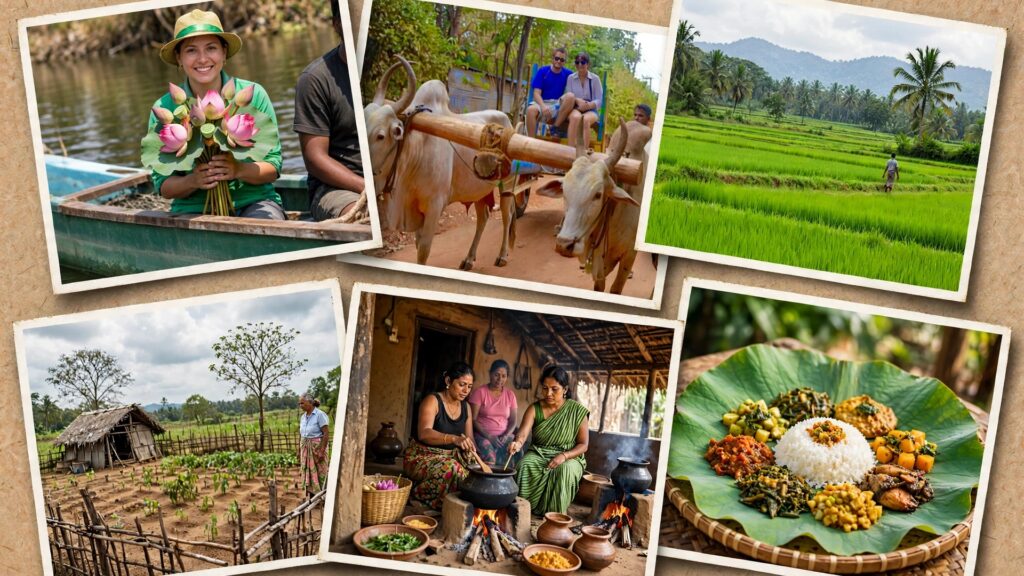
You have seen the photos online. A wooden ox-cart creaking down a red-dirt lane. A local woman stirring curry in a blackened clay pot over a wood fire. A flat-bottomed boat gliding across a lake padded with lily flowers, the great orange rock rising in the far distance.
This is the Sigiriya village tour. It takes about three to five hours. Right now, it is the single most-booked alternative experience in Sri Lanka’s Cultural Triangle.
The experience went properly viral through 2025 and into 2026. Travel forums, YouTube vlogs, and social media feeds all converged on the exact same question in comment sections: how do I book this? The answer, the full breakdown of what your money actually buys, where the funds land, and every practical detail a first-timer needs, sits right here in this guide.
Sigiriya draws over a million visitors a year to its famous rock fortress. Most climb the steep steps, take a picture at the summit, and leave. The village circuit exists for the travelers who want the afternoon after the climb. Or instead of the climb. Whatever your schedule looks like, this rural outing slots in cleanly and rewards you with a meal cooked in a real family kitchen using recipes that predate modern tourism by centuries.
What Actually Happens on the Sigiriya Village Tour
Booking pages usually give you a four-line bullet list and call it a day. You deserve a proper walkthrough of the entire afternoon.
The ox-cart ride
Your guide picks you up from your hotel or a central meeting point near Sigiriya town. A short tuk-tuk transfer brings you to the edge of the agricultural zone. Waiting there is a wooden bullock cart, the exact kind local farmers have used for generations to haul rice paddy and coconuts. Two oxen pull it. You sit on a rough plank bench under a woven canopy. The cart moves at a walking pace along narrow dirt paths lined with banana trees, coconut palms, and the occasional curious village dog. The whole stretch lasts around fifteen to twenty minutes. It is bumpy and slow. That is exactly the point.
The boat ride on Thalkote Lake
The cart deposits you near the shore of Thalkote Lake. This is a calm, shallow reservoir fringed with lotus and water lilies. You step into a small catamaran or dugout canoe. A local boatman poles or paddles you across the water. The surface is still enough to mirror the sky. Sigiriya Rock and Pidurangala Rock sit on the horizon. Depending on the season and the specific operator, the crossing takes ten to twenty minutes.
The cooking class and village lunch
This segment anchors the entire outing. You arrive at a family home or a purpose-built rural kitchen. A local woman leads you through preparing traditional Sri Lankan dishes. Think dhal tempered with mustard seeds, a coconut-based vegetable curry, and maybe a small fish preparation if the morning catch was good. Everything cooks in clay pots over a wood-fired stove. You stir, you chop, and you ask questions. Then you sit down and eat what you just made, served on banana leaves with rice and papadum.
The return trip
Depending on the company running your day, the return journey might retrace the ox-cart path or take a short walk through green paddy fields before the tuk-tuk collects you and drives you back to town.
Sigiriya Village Tour Cost and What It Includes
Pricing fluctuates based on the season, the specific operator, and whether you book direct or through a third party. Generally, the cost ranges from $20 to $35 USD per person. In local currency, you will see quotes between 6,000 and 10,000 LKR.
Here is what that price range typically covers across most reputable operators:
- The ox-cart ride with a dedicated handler
- Tuk-tuk transfers between the village, the lake, and your pickup point
- The catamaran or canoe ride on Thalkote Lake with a boatman
- The hands-on cooking demonstration with all raw ingredients
- The full lunch you cook and eat
- A local guide accompanying the group
- Basic drinking water
The standard fee usually excludes hotel transfers from far-out areas like Dambulla or Kandalama, alcoholic drinks, and tips for the staff. Tipping is customary in Sri Lanka and highly appreciated. A small tip for the cook and the boatman goes a long way in supporting the local households.
The value calculation is highly favorable. A comparable cooking class in the southern beach towns runs much higher. Bundled together with the transport and the lake crossing, the rural outing undercuts the sum of its individual parts significantly.
How to Book the Experience
Securing a spot is genuinely easy, which explains the rapid rise in popularity over the last eighteen months. You do not need to negotiate a price on the street or arrange anything through a complicated chain of contacts.
Online travel agencies
Platforms like GetYourGuide and Viator carry multiple listings. Search the primary keyword, compare the available operators, check recent reviews, and book with a credit card. Most listings offer free cancellation up to 24 hours before the start time. Instant confirmation arrives by email. If you are travelling in peak season, reserve at least three weeks out.
Eco-focused and direct operators
Many travelers prefer booking directly with local companies to keep the revenue within the community. Eco-focused operators like Sigiriya Jungles offer their own carefully managed take on the village tour, often emphasizing smaller group sizes and deeper environmental practices. Booking direct means your money enters the local business account without a foreign middleman taking a commission. Look for companies with a verifiable Sri Lanka Tourism Development Authority registration number.
Your hotel or driver
Nearly every guesthouse in the area can arrange the outing through a partner company. Walk up to the front desk the evening before, ask, and they will handle the logistics. If you hired a private car and driver for the Cultural Triangle, just mention the village tour. Most drivers work with a specific operator and can slot it into your day. The main caveat here is that you lose the ability to compare operators or read independent reviews when the choice is made for you.
Whichever route you choose, confirm three things before you hand over any cash:
- The exact pickup time and location.
- Whether the boat ride is included in your specific package.
- The maximum group size. A cooking class with twenty strangers loses its charm very fast. Aim for a group of six to eight people maximum.
Thalkote Lake and the Rotawewa Circuit
Thalkote Lake forms the scenic heart of the entire outing. This body of water is a traditional wewa, an ancient man-made reservoir designed to capture monsoon rains for dry-season farming. The surface stays incredibly calm throughout the year. Flat-bottomed catamarans and wooden canoes glide right over the top. Water lilies and lotus flowers frame the edges, creating a vibrant border of pinks and whites against the dark water.
Photographers love the mid-morning light hitting the reservoir. The reflection of the ancient rock fortress creates a perfect mirror image on the surface. The boatman usually pauses in the center of the lake to let everyone take pictures.
Some visitors want to paddle themselves. A few local outfits now offer kayak rentals on the water. You have to ask for this specifically when booking. The traditional canoe ride remains the standard inclusion and offers a much more relaxing experience since the boatman does all the work.
The broader area surrounding the lake is known as Rotawewa. This specific zone has gained a strong reputation for sustainable agriculture. Travelers taking extended walks through the paddy fields often spot women-led farming cooperatives. These local groups grow organic vegetables and rice. The village tour often sources its cooking class ingredients directly from these very plots, creating a closed-loop food system that benefits the local growers.
The Ethics Check: Where Does the Money Go?
Conscious travelers always ask about the financial breakdown. When you pay for a rural experience, you want the funds to reach the actual community. The Sigiriya village tour operates on a community-based tourism model, which prioritizes local retention of income.
Here is how the fee is typically distributed across the local economy:
- Transport costs: Fuel and daily wages for the tuk-tuk drivers.
- Fees: The boatman’s daily rate and maintenance of the wooden canoes.
- Raw ingredients: Purchases of rice, spices, coconut, and fresh vegetables from local markets or the Rotawewa farms.
- Host family payment: A fixed wage paid directly to the family for their time, labor, and kitchen use.
- Guide fees: Wages for the local guide bridging the language and cultural gap.
The Sri Lanka Tourism Development Authority actively monitors these partnerships. Reputable companies ensure the host families receive a fair, fixed wage per group, regardless of the tourist’s bargaining power. Tipping the cook and the boatman at the end of the day provides an extra, direct injection of cash to the household. This transparent distribution model is exactly why the experience maintains such high ethical ratings among mindful travelers.
The 2026 Slow Travel Movement
Global travel habits shifted massively over the last few years. The rush to check off famous monuments lost its appeal for a huge segment of tourists. People started craving genuine connection. They want to smell the woodsmoke. They want to hear the rhythm of a mortar and pestle.
This rural outing captures that modern demand perfectly. It forces you to slow down. The ox-cart moves at the speed of a walking cow. The boatman poles the canoe at a leisurely drift. You sit on a wooden stool and grate coconut for twenty minutes. This deliberate pacing creates space for actual conversation. You learn about the host family’s children, their harvest, and their daily routines. The experience transforms a standard vacation day into a deeply personal memory.
Practical Tips: What to Wear and Bring
Packing for a day in the Cultural Triangle requires a bit of strategy. The sun gets very intense by mid-morning, and the rural environment has its own set of rules.
Clothing: Wear light, breathable fabrics. Cotton or linen works best. The village is a working community, so modest dress is strongly advised. Cover your shoulders and wear trousers or long skirts. This shows respect for the local culture and protects your skin from the sun and scrub.
Footwear: Leave the flip-flops at the hotel. You will be walking on uneven dirt paths and stepping into shallow mud near the lake edge. Sturdy sandals or lightweight sneakers are the right choice.
Sun and Bug Protection: The lake edge and the paddy fields harbor mosquitoes. Apply a strong insect repellent before you leave your room. Bring a wide-brimmed hat and sunglasses for the open ox-cart ride.
Cash: Carry small denominations of Sri Lankan Rupees. You will need these for tipping the boatman, the cook, and the ox-cart handler. Buying a fresh king coconut from a roadside stall on the way back also requires physical cash.
A Brief History of Rural Tourism in the Area
Community-focused travel in this region did not just appear overnight. The roots trace back to early government initiatives in the late twentieth century. Planners wanted to spread the economic benefits of the famous rock fortress out to the surrounding farming communities.
Early versions were very basic. A tourist might just share a pot of rice and curry with a local family in their living room. Over the decades, the model became highly structured. Local entrepreneurs realized that visitors wanted a curated, safe, and hygienic experience without losing the rustic charm. They built dedicated outdoor kitchens. They trained guides to bridge the language gap. They standardized the boat safety protocols.
The result in 2026 is a highly professional operation that still feels deeply authentic. The host families retain their cultural practices while participating in a modern, global industry.
Frequently Asked Questions
Is the Sigiriya village tour suitable for young children?
Yes. The slow pace of the ox-cart and the boat ride keeps kids engaged. The cooking class offers a fun, sensory activity. Just keep a close eye on them near the open wood fires and the lake edge.
Do I need to know how to cook to join the class?
Absolutely zero culinary skill is required. The host handles the complex spice tempering and heat management. Your job is simply to chop vegetables, stir the pots, and eat the final result.
What happens if it rains during the tour?
The tropical weather is unpredictable. Light drizzle usually just adds to the lush green scenery. The cooking area is covered. Heavy monsoon downpours might force a cancellation, and reputable operators will issue a full refund or reschedule.
Can I do the village tour and climb the rock on the same day?
This is the most popular combination. Most visitors climb the rock fortress at dawn to beat the heat. They return to the hotel for breakfast and a rest, then head out for the village outing around 10:00 AM or 3:00 PM.
Are vegetarian and vegan options available?
Sri Lankan cuisine is incredibly friendly to plant-based diets. The standard menu relies heavily on coconut, lentils, and local vegetables. Just inform your guide of your dietary requirements at the start of the trip so the host can prepare accordingly.
How far in advance should I book?
During the peak dry season from December to April, operators fill up fast. Booking two to three weeks ahead guarantees your preferred time slot. During the off-season, you can often book just a day or two in advance.